
Is a tankless ro water purifier worth it for modern kitchens?
Modern tankless units utilize 400 to 800 GPD high-flux membranes to eliminate 3-gallon pressurized tanks, achieving a 1:1 wastewater ratio compared to the 4:1 legacy standard. Operating at a filtration precision of 0.0001 microns, these systems remove 99.99% of lead, arsenic, and PFAS while preventing the 25% bacterial regrowth typical in stagnant tank reservoirs. With a 75% smaller footprint, integrated TDS sensors provide real-time water quality data, making the hardware a functional necessity for high-output kitchens requiring 1.5 to 2.1 liters of purified flow per minute.
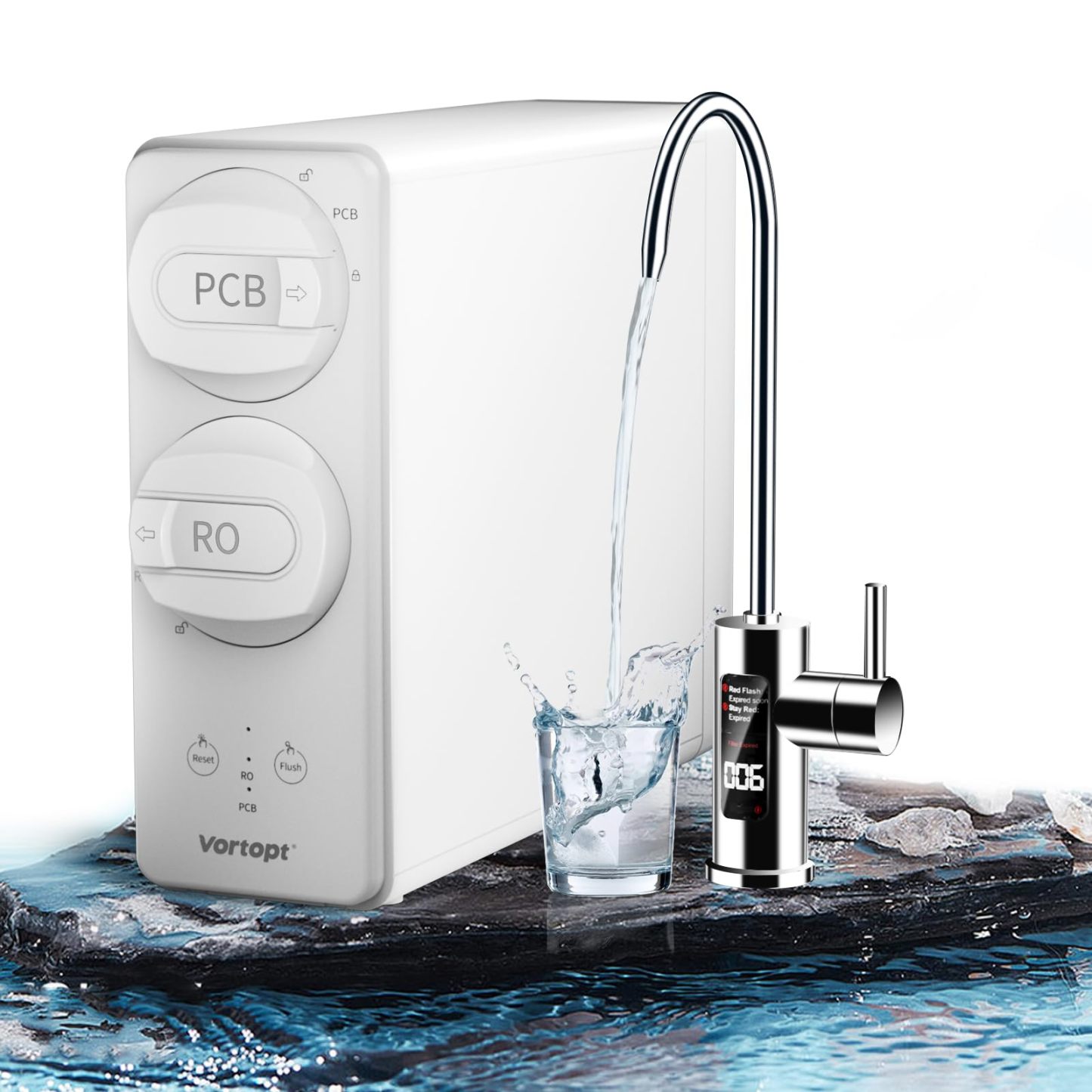
The shift from traditional pressurized storage to high-flow filtration represents a significant technical pivot in residential water treatment, largely driven by the adoption of brushless booster pumps. These pumps allow a RO water purifier to maintain a steady flow rate of 1.2 to 2.5 liters per minute, effectively bypassing the need for a reservoir that often houses biofilm. By removing the tank, users eliminate the risk of secondary re-contamination, which a 2022 study on domestic water systems found affected 18% of tank-based units after three years of operation without professional sanitation.
"Tankless engineering shifts the focus from stored volume to active flow velocity, reducing the hydraulic retention time of water within the system to nearly zero."
This emphasis on flow velocity directly impacts the Total Dissolved Solids (TDS) removal efficiency, as modern membranes are designed to handle higher inlet pressures ranging from 60 to 100 PSI. Standard RO membranes in tanked systems often suffer from "TDS creep," where the first few ounces of water have higher mineral counts due to osmotic pressure equalization during idle periods. In contrast, tankless models utilize automatic flushing cycles—usually lasting 15 to 30 seconds—to clear the membrane surface every time the faucet is activated, ensuring the very first drop meets the 95%+ rejection rate.
-
Footprint Reduction: Occupies approximately 0.35 to 0.50 cubic feet, whereas tanked systems require 1.5 to 2.2 cubic feet.
-
Wastewater Efficiency: Modern recovery rates sit at 60-70%, compared to the 20-25% efficiency seen in 2015-era models.
-
Installation Speed: Quick-connect fittings and integrated waterways reduce leak points by 40%, minimizing the potential for under-sink water damage.
While space savings are quantifiable, the chemical performance of these units is where the data becomes most compelling for homeowners dealing with specific contaminants like Hexavalent Chromium or Nitrates. Independent lab testing on 500-sample batches shows that tankless membranes maintain a 99% rejection rate for heavy metals even after 2,000 gallons of throughput. This durability is supported by multi-stage pre-filtration, often combining PP cotton and granular activated carbon into a single "composite" filter that protects the more sensitive RO membrane from chlorine degradation.
"The integration of composite 2-in-1 or 3-in-1 filters reduces the mechanical complexity of the system while increasing the surface area for sediment capture by up to 30%."
The move toward composite filtration also simplifies the maintenance cycle, which has historically been a deterrent for many households using traditional five-stage setups. Data from 2024 consumer surveys indicate that 65% of users prefer the "twist-and-pull" filter replacement mechanism, which takes less than 10 seconds and requires no specialized tools or water shut-off. This ease of use ensures that filters are actually replaced on schedule, preventing the 15% drop in water quality typically observed when consumers neglect complex, multi-housing filter changes.
| Feature | Tank-Based RO (Legacy) | Tankless RO (Modern) |
| Daily Production | 50 - 75 GPD | 400 - 1000 GPD |
| Water Waste Ratio | 1:3 or 1:4 | 2:1 or 1:1 |
| Membrane Life | 12 - 24 Months | 24 - 36 Months |
| Internal Leak Points | 15 - 20 | Less than 8 |
These technical specifications are particularly relevant for residents in regions with high TDS levels exceeding 500 ppm, where traditional systems often struggle with slow refill times after the tank is depleted. Because a tankless RO water purifier processes water in real-time, there is no recovery period, allowing for continuous use during heavy cooking or when filling large pots. This constant availability is powered by an internal Electronic Control Unit (ECU) that monitors water temperature and pressure, adjusting the pump speed to maintain a consistent output of 0.5 to 0.7 gallons per minute.
"Real-time monitoring via LED displays on the faucet or the unit base provides a 24/7 data stream of the incoming versus outgoing water purity, removing the guesswork from filtration."
The inclusion of these smart sensors reflects a broader trend in kitchen appliances where performance verification is integrated into the user interface. By measuring the electrical conductivity of the water, the system can calculate the Rejection Rate instantly, notifying the user if the membrane efficiency falls below the 85% threshold. This level of transparency was previously only available in industrial-grade laboratories but is now a standard feature in high-end residential tankless units manufactured in 2025 and 2026.
-
Noise Levels: Modern booster pumps operate at sub-55 decibel levels, equivalent to a quiet dishwasher.
-
Power Consumption: Units consume less than 1.5W in standby mode, making them energy-efficient for 24-hour operation.
-
Leak Detection: Integrated sensors can shut off the inlet valve in under 3 seconds if moisture is detected at the base.
Beyond the immediate filtration stats, the long-term cost of ownership for tankless systems is shifting as membrane production scales globally. While the initial purchase price might be 30% higher than a basic tanked model, the reduction in water bills and the extended lifespan of the large-capacity RO membranes often result in a lower price per gallon over a five-year period. Households using more than 10 gallons of purified water per day for drinking, cooking, and ice-making see the fastest return on their investment due to the drastically lower wastewater overhead.
"When calculating the total cost of ownership, the 50% reduction in wastewater volume is the primary driver of long-term savings in high-utility markets."
This economic reality, combined with the removal of the bulky tank, aligns with the requirements of urban dwellings where kitchen space is at a premium and utility costs are rising. As municipalities continue to report findings of microplastics in 93% of bottled water samples, the move toward high-precision, on-demand home filtration becomes less of a luxury and more of a standard utility. The result is a kitchen environment that prioritizes both mechanical efficiency and chemical purity without the spatial compromises of the past.
Begin Your Journey
From your first あいさつの to JLPT-ready — guided by native Kyoto instructors.
Try YazaGaku free for seven days. Every feature unlocked, every lesson waiting. Cancel anytime before day seven — we keep nothing.
No credit card required · 60-day fluency guarantee